
- Introduction
- Personalisation and Targeting Strategies for Betting Apps
- How to Incorporate Gamification in Betting Apps
- User Acquisition Partnerships for Sports Betting Apps
- Effectiveness of Deep Linking in Betting Apps
- Mapendo’s Solution for Your Sports Betting App
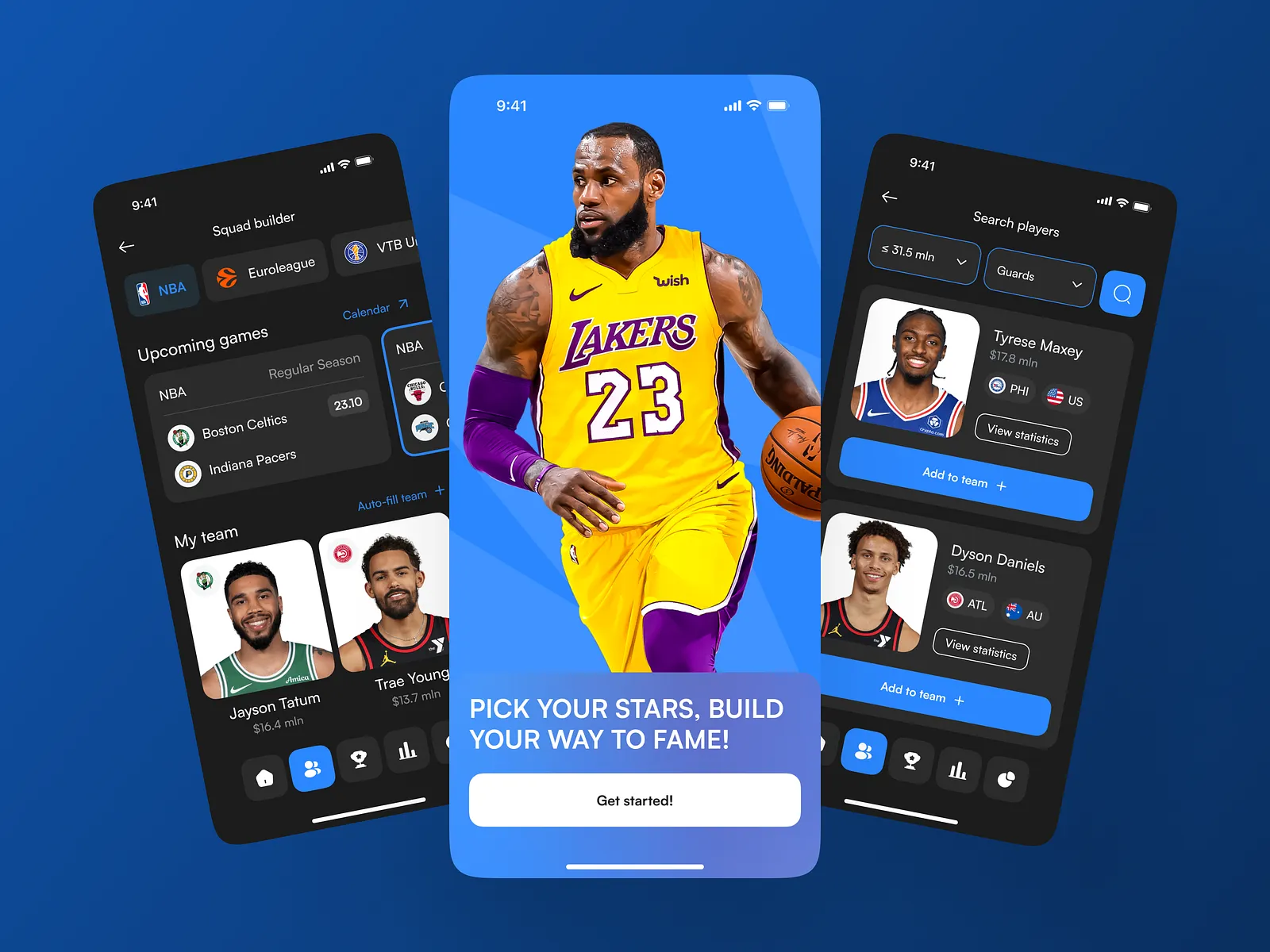
Among the most downloaded apps in recent years are sports betting and fantasy sports applications, which include virtual competitions often based on the real-life performances of professional athletes. The term “fantasy sports” is a form of online gaming in which participants select real-world players to create virtual “teams,” join a “league,” and assume the role of “managers.”
Due to a highly engaged and passionate sports audience, these applications have achieved substantial download numbers and active user bases. With the surging popularity of online sports betting with an impressive install spike in 2024, companies are increasingly investing in this industry, contributing to its rapid growth and intensifying competition. In this context, identifying the most effective user acquisition (UA) strategies for sports betting and fantasy sports apps is essential to gaining and maintaining a competitive advantage.
An effective strategy to ensure active engagement in sports betting and fantasy sport apps is to personalize the user experience by tailoring it to each individual user. Personalization, although often overlooked, represents a key opportunity to enhance both acquisition and retention. Many betting apps fail to adapt their homepages or promotional offers based on a user’s betting history, missing a valuable chance to increase engagement. Customizing content, such as displaying feeds centred on a bettor’s favourite teams or preferred sports, can significantly improve the overall experience. Furthermore, integrating AI and predictive analytics enables platforms to deliver more relevant promotions and betting suggestions, creating a more dynamic and personalized environment that fosters long-term engagement.
At the same time, effective user acquisition requires attracting users who will generate sustainable value. To protect the UA budget and maximize return on investment, it is essential to analyse data from high lifetime value (LTV) users in order to understand what drives their engagement and how they interact with the betting app. Identifying patterns in user behaviour allows companies to define detailed audience profiles. Some of these identifiable patterns can be interest in specific sports, preferred times of activity, responsiveness to certain promotions, and preferences for single bets or live in-play betting. All of these insights make it possible to build precise target segments and develop tailored user acquisition strategies aimed at acquiring users with similar characteristics. By leveraging reliable measurement tools, such as a Mobile Measurement Partner (MMP), companies can ensure data accuracy throughout user acquisition, campaign analysis, and optimization process, ultimately improving the effectiveness of their user acquisition efforts.
Localization also plays a crucial role in targeting in the sector of betting apps. In fact, localization demands an in-depth understanding of local betting preferences and habits as long as legal requirements. This includes tailoring payment methods, adapting odds formats, creating region-specific promotions, and integrating responsible gambling measures to align with cultural and regulatory expectations. Different regions have unique sports betting preferences shaped by local influences. In the same way, different sports will attract the interests of different countries, reflecting the diverse betting habits of global audiences.
Gamification is an effective UA resource that can be applied to sports betting apps in various ethical ways. The first instance of how to incorporate gamification is spin-to-win games. They consist of fun, non-betting elements that offer users entertainment and rewards, such as tokens that can be used to access exclusive content, skip ads, personalize the look and feel of the app with skins of their favourite teams, or even get a discount on virtual events. Daily challenges and quests are another gamification tool that is vastly used within sports betting apps. They introduce tasks to complete non-betting activities, such as virtual sports simulations or engaging with sports content, to encourage users to return regularly. Reward users with points, badges, or other non-monetary incentives for consistent participation.
Finally, other ways to incorporate gamification to sports betting apps and fantasy sports apps are leaderboards and achievement badges. The former, leaderboards, is meant for users to track their progress in completing non-betting challenges, such as predicting game outcomes or answering sports trivia questions, fostering a sense of competition, engagement and community. The latter, achievement badges, are award badges attributed to users who explore different sports, complete educational modules about responsible gambling, or answer polls. Display these badges on user profiles to provide a sense of accomplishment and encourage ongoing interaction with the app.
User acquisition partnership has become a key component of user acquisition for sports betting apps, providing a targeted and cost-effective way to reach potential bettors. User acquisition partnerships are collaborations between two or more organizations designed specifically to bring in new users or customers for a product or service. Instead of acquiring users only through paid ads or organic marketing, a company leverages another partner’s audience, distribution, or platform to gain access to potential users.
User acquisition partnership is an umbrella term including bloggers, sports influencers and specialized betting websites, who create content tailored specifically to sports enthusiasts and betting audiences. This content often includes in-depth reviews, betting guides, predictions, and game analyses, designed to engage readers who are already inclined toward sports betting. Partners are provided with marketing materials, resources and tools, such as eye-catching banners and widgets or captivating landing pages, to support their promotional efforts. Through these partnerships, betting affiliates direct high-intent traffic to betting apps, earning commissions for user sign-ups or bets placed.
In particular, influencers play a key role in partnerships, since partnering has become a powerful strategy to build credibility and trust, as well as to connect with a highly engaged audience. Influencers range from well-known athletes and sports analysts to content creators specializing in betting insights and strategies, each bringing unique expertise and dedicated followers. These partnerships often feature sponsorship deals or promotional codes, providing followers with exclusive bonuses when they sign up. Incentives, alongside the influencer’s established reputation, foster a sense of community and trust and significantly increment user acquisition rate.
Ultimately, the effectiveness of these partnerships depends on identifying the right user acquisition platforms and companies specialized in this type of activity. For betting apps, it is often advantageous to collaborate with platforms operating on a CPA model, where partners are rewarded only when a defined conversion event occurs. These platforms are typically able to optimize user acquisition campaigns based on post-install events, such as registrations, deposits, or first bets, allowing companies to focus not only on installs but on acquiring users who generate real value for the platform.
As easy a technique as the use of deep linking is actually valuable for betting apps user acquisition, plus extremely effective and essential to guide users directly to relevant content within apps, creating a more cohesive and personalized experience. Deep linking consists in using a specific URL to directly address users to a webpage, a content or a specific function in a mobile app or a website, bypassing the homepage and creating a seamless journey from the first click to in-app engagement. Instead of sending users to a generic landing page, deep links deliver them directly to a specific page, such as a specific sporting event, a promotion or live scores. For example, a user clicks a link shared by a sports influencer on social media. The deep link takes them to a sign-up page with the influencer’s promo code pre-applied. This ensures a smooth path from ad click to bet placement, with accurate attribution to the influencer.
Furthermore, deep linking can be used to address multiple issues that could emerge within sports betting apps, such as cross-device fragmentation, loss of attribution in campaigns and gaps in performance data and high drop-off rates. Cross-device fragmentation can be effectively mitigated through web-to-app scripts that enable a seamless transition from web browsing to app usage while preserving information about the user’s journey. For example, should a user be checking the odds for a specific sports game on the mobile web and then decide to install the betting app, the script can redirect them directly to that same game’s odds page inside the betting app. Furthermore, to address issues such as attribution loss in campaigns and gaps in performance data, a deep linking solution using a multi-platform approach is essential. These deep links function smoothly across both iOS and Android and across all major campaign channels, including social media, search, SMS, email, connected TV (CTV), in-app ads, and push notifications. Multi-platform support ensures that data from the entire user journey is captured accurately, even when users move between different devices.
Our technology continuously analyzes traffic sources and audience segments to determine the most effective combinations for user acquisition, ensuring scalable growth while maintaining performance efficiency. Mapendo’s vast experience with sports betting apps and fantasy sports apps makes us able to optimize the install-to-registration rate and then registration-to-FTD (first time deposit). Furthermore, we dispose of sufficient data to optimize user acquisition campaigns towards the so-called paying users, meaning users who have a higher probability of effectuating deposits and spending money within the app.
Mapendo has valuable experience of several excellent collabs with similar clients. Within these collaborations we have developed extremely successful strategies by coordinating sport events calendars, updating creatives and getting to know about possible promotions and dedicated offers. Contact us if you want to know more about user acquisition strategies for your sports betting apps and fantasy sport apps.