In today’s digital ecosystem, succeeding in the highly competitive mobile app market requires more than scaling user acquisition. While reaching large volumes of users is an important component of any growth strategy, it can not be , at least not by itself, the key to success. App developers can achieve long -term revenues only by transforming their audience into active, paying, high-value users- and that’s exactly where In-App Purchases play a crucial role.
As It also represents a significant element for retention and a crucial basis for users engagement, In-App purchases really constitute a determinant factor among every app creator.The aim of this article is to let you have a complete overview of In App Purchases making you explore the most proficient and used monetization strategy and the tools to efficiently implement it.
More specifically thanks to this text you’ll be able to understand:
Different Types of In-App Purchases
Concrete Implementations of In-App Purchases
How Mapendo Maximise App Revenues through In-App Purchases
There are several ways to put into practice and apply in-app purchases, understanding each of them make app’s developers implement this in-app monetization strategy in the best way not just to boost revenues but also to optimize app’s users' experiences.
In this paragraph we will go deeper about those different application methods, analyzing the most used and efficient ways to concretize in app-purchases.
Direct purchases within the app
This the most common way to apply in-app purchases as consists of direct transactions achieved usually through two basis approaches:
- Via App store integrations: this strategy allows users to buy digital content or services within the mobile application using the platform’s app store (such as Apple’s App Store or Google Play) specifically using their payment system. To note is that although this method charges developers commissions to be implemented (specifically the usual rate on Apple App Store is 30% with a discounted rate of 15% for eligible developers and about Google Play the fee is 15% for the first $1M and 30% on earnings above $1M), it enables quick and safe transactions using pre-stored payment methods such as credit/debit cards or digital wallets.
- Direct payments through the app: Some apps also offer the users the possibility to directly insert credit/debit cards data inside the app, in this way enabling them to make purchases without even leaving the main app screen they are using . This implementation is particularly efficient especially inside online marketplaces such as Amazon and
- Asos but also very common inside ride-hailing platforms as it minimizes friction of the users who just need to click on the buy button and confirm the purchasement with Face ID/fingerprint to complete the payment in a few seconds.
Third-party payment processors
This type of IAP is more adapted for users who prefer not to store payments details directly in apps or app stores, in fact users thanks to this method will no longer be locked into submitting payments details inside the app or inside the mobile store: those Third-party processors redirect users to external sites responsible for digital payments such as Paypal or Stripe.
In-app purchases (IAPs) allow app developers to monetize their products by offering users additional content, features, or services directly within the app. These purchases can take different forms depending on how they are accessed, consumed, and renewed. Below are the main types of in-app purchases and how each one functions.
Non-consumable in-app purchases
Non- consumable in-app purchases are one-time buys that are permanently available within the app, they are tied to a user’s account and won’t expire using them. Inside this category for example we can mention the charge to unlock extra game levels, to remove disturbing ads, the purchase of a bundle of videos, or the one-time charge to get premium advantages.
Consumables
Digital products that, contrary to non-consumable in-app purchases, once are used, must be purchased again to be available in the stock. A common example of this In-App purchases come from premium content purchased through in-app currency. Generally this IAP generates higher profit as users are pushed to buy the digital goods/ services more than once.
Auto-renewable in-app purchases
They are basically on subscriptions, once the user is logged he will be charged automatically without giving the consent multiple times. The periodicity of purchases can be weekly, monthly, or annually depending on subscription setting. This is with no doubt one of the most used in-app purchases for the reason it guarantees a steady stream of revenues for app developers. This monetizing technology is very common across apps that offer both free basic versions but also a premium one charged time by time to improve user’s in-app experience, however the app audience must be able to cancel this periodical service.Another common use of this app is also related to online marketplace where lot of brands offer the possibility of discounted products throughout a specified period of time.
Non auto-renewable in-app purchases
They are simply “prepaid” subscriptions that allow users to purchase a service for a fixed period of time. Once this term ends, users lose their access and need to manually reconfirm the payment for another subscription cycle or for a different premium plan: very used especially for magazines (both digital or print) and more in general for physical products and sporting events.
Now that we get the theoretical background lying behind In App Purchases, let’s see how the leaders of the digital market transform this monetization strategy into the key for their company’s success.
Strava
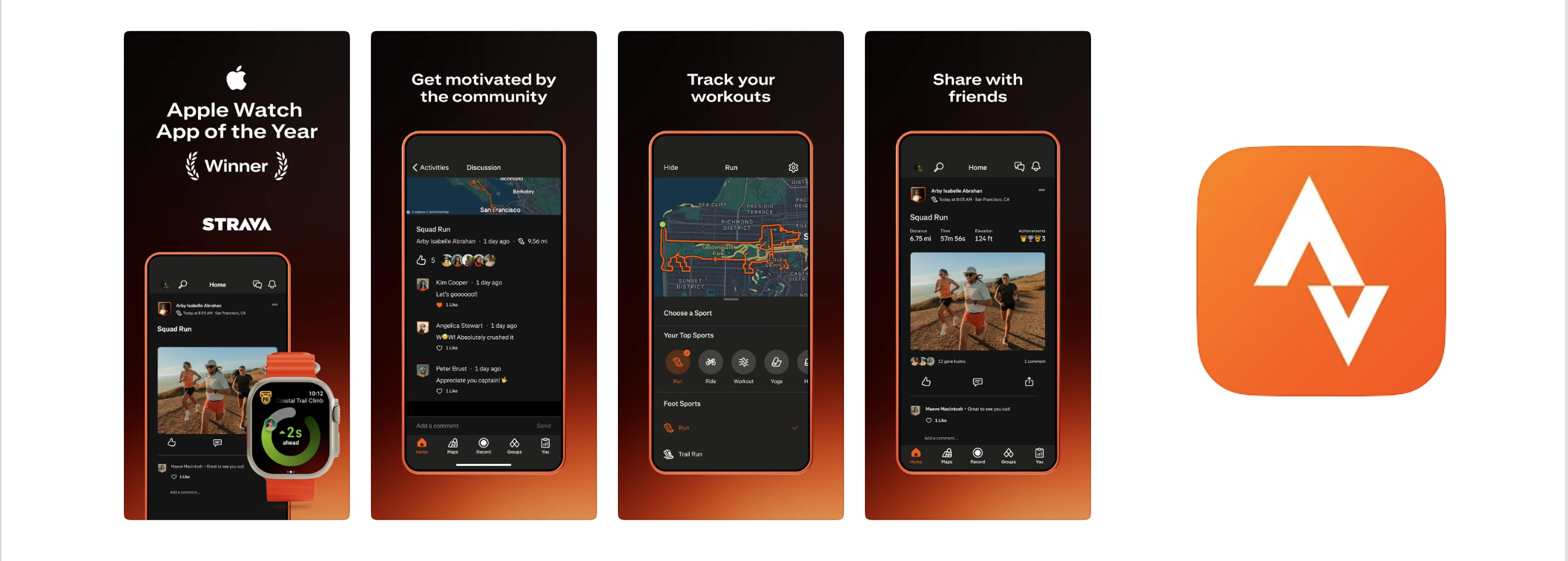
Definitely one of most motivating and self-enhancing apps of the last decades, Strava is a social network for athletes across basically all kinds of sports- running, skiing, cycling, swimming but also tennis, skating and many more. In this app, creating a social profile is all it takes to share all activity with related (optional) photos and descriptions, creating like that, a dynamic feed of workouts and adventures.
Through this app members can also follow their friends, like their activities and comment on their training sessions but what’s even more catchy is that they are also able to find and join sporting events: the key to make sport a perfect match between social and fun!
Among the Strava’s core features we can surely mention the value of activity tracking, example recording runs, rides, walks or hikes through GPS but to highlight are also the training and coaching features of the app that give you a lot of performance insights among which pace, distance elevation and heart rate, to make user have a fulfilling sportive experience also with the free base subscription.
Although the strava download and basic usage is free, the app also offers the opportunity to have advanced tools such as personalized training plans, guides to discover new routes and workouts and advanced analytics to help athletes reach their full potential. As we are talking about premium features we can link this app with consumable in-app purchases that, specifically in this case, are autorenewable and that can have a period duration of one month or of a whole year (with a discounted price) based on user’s preferences.
Spotify
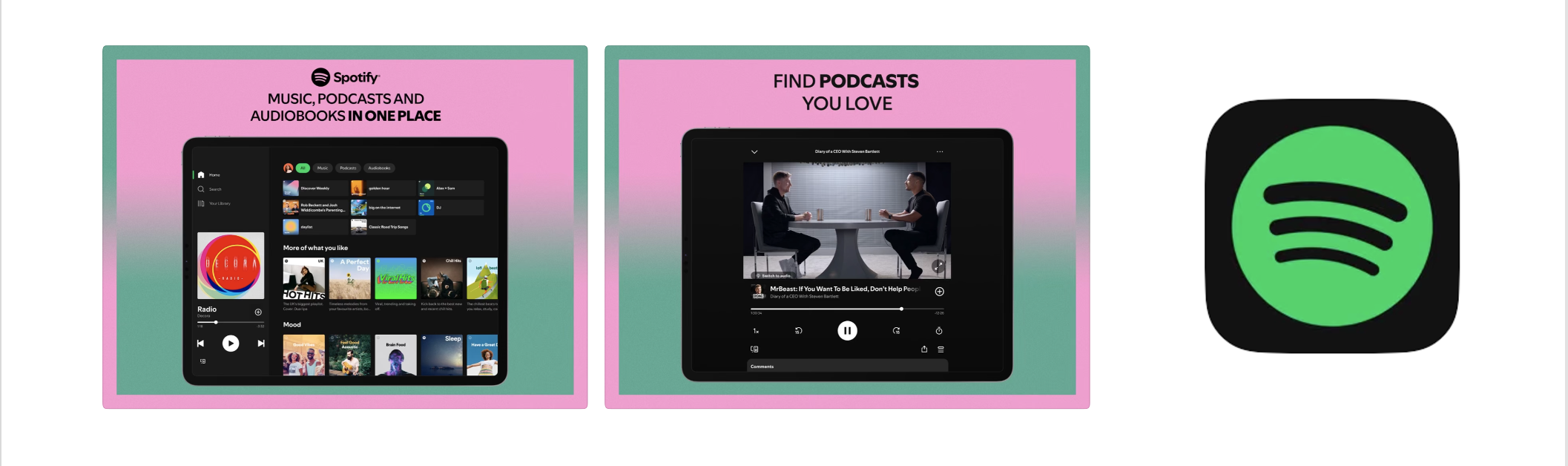
Another leader in the mobile app market is represented surely by Spotify: a digital music streaming platform that provides on-demand access to millions of songs and podcasts just a click away from users.
This app works across multiple different platforms simultaneously and it is structured in a free-subscription base model offering the audience to receive personalized playlist and recommendation based on their preferences to discover, stream and manage contents across multiple devices.
Although the Spotify initial subscription is free for new users, all the best advantages related to this app are included into premium tiers: this revenue model can be defined as the Freemium model. The premium plans offered by this app in fact unlock enhanced features to improve users experience, among them we can find Ad-free listening, Offline playback, Higher audio quality offered but also to mention is the real-time shared listening experience Spotify Jam, recently implemented inside the app.
Spotify's core monetization structure is therefore based on a monthly auto-renewable IAP model where users are billed periodically different amounts according to different premium plans offered: Individual, Duo, Family, or Student plan.
Subway Surfers
A popular mobile game that since its release, in 2012, hasn’t stopped climbing the top-performing charts: thanks to its vibrant graphics, fast-paced gameplay and to its continued world-themed updates, it has been scaling the level of download till the last year, during which it generated roughly 191 million of downloads during 2025.
The role of the player in this game, as it is described also in the app’s title, is based on the ability to conduct the main character sprinting along subway tracks while avoiding rains, barriers and other obstacles. The main content of the game will then progressively increase in speed and difficulty keeping a high level of engagement across users by providing daily challenges and score multipliers as game-rewarding strategy.
Subway Surfers mainly use Consumable IAPs characterized more specifically by coins, used to upgrade power-ups or to unlock new characters but also based on Keys which allows the players to revive after a crash. Another tool associated with this In-App Purchases method are also the power-up boosts that consist of extra magnets to further gain currency or score multipliers. The app, although definitely less used than Consumables, offers also a Non-Consumable app monetization with the possibility for players to unlock permanently new featured characters.

As every app developer knows, increasing the user acquisition is the base to generate concrete profits. Inside today’s digital ecosystem where everyone has free access to most of the online contents, In-App Purchases in fact represent a crucial pillar for any effective app revenue strategy.
IAPs not only enable higher and more stable revenue streams, but also represent a strong alternative to In-App advertising, reducing reliance on intrusive ad formats while improving the overall user experience.At Mapendo, one of our core objectives is to increase the user base with a strong focus on high-value users, which represents the slice of the audience more likely to convert, engage, and remain loyal over time, improving not only the quality of the audience but also its long-term retention.
Mapendo specializes in advertising campaign optimization through the analysis of user behaviours and key performance metrics. By tracking user interactions with both the app and the ads and processing contextual data such as IP addresses, internet connection, operating system, and device version, we gain valuable insights that drive smarter marketing decision making. These also allow for advanced user segmentation and personalization, which leads to highly targeted IAP strategies that increase engagement, improve user loyalty and enhance conversion rates.
Through this data-driven approach, developers gain a deeper understanding of consumer behavior, unlocking opportunities for flexible pricing models, promotional strategies, and personalized offers.
To make a long story short, Mapendo empowers its clients to maximize revenue from each marketing campaign, ensuring that every dollar spent delivers valuable results which basically translates into scalable, and profitable growth strategy.