In today’s digital ecosystem, building a successful mobile app is no longer just about creating a great product, but concerns the company’s ability to attract and retain the right users, without which scalability and growth are difficult to achieve and maintain. This explains the role of user acquisition, essential to reach the perfect user base and find customers willing to engage in the app and generate revenues.
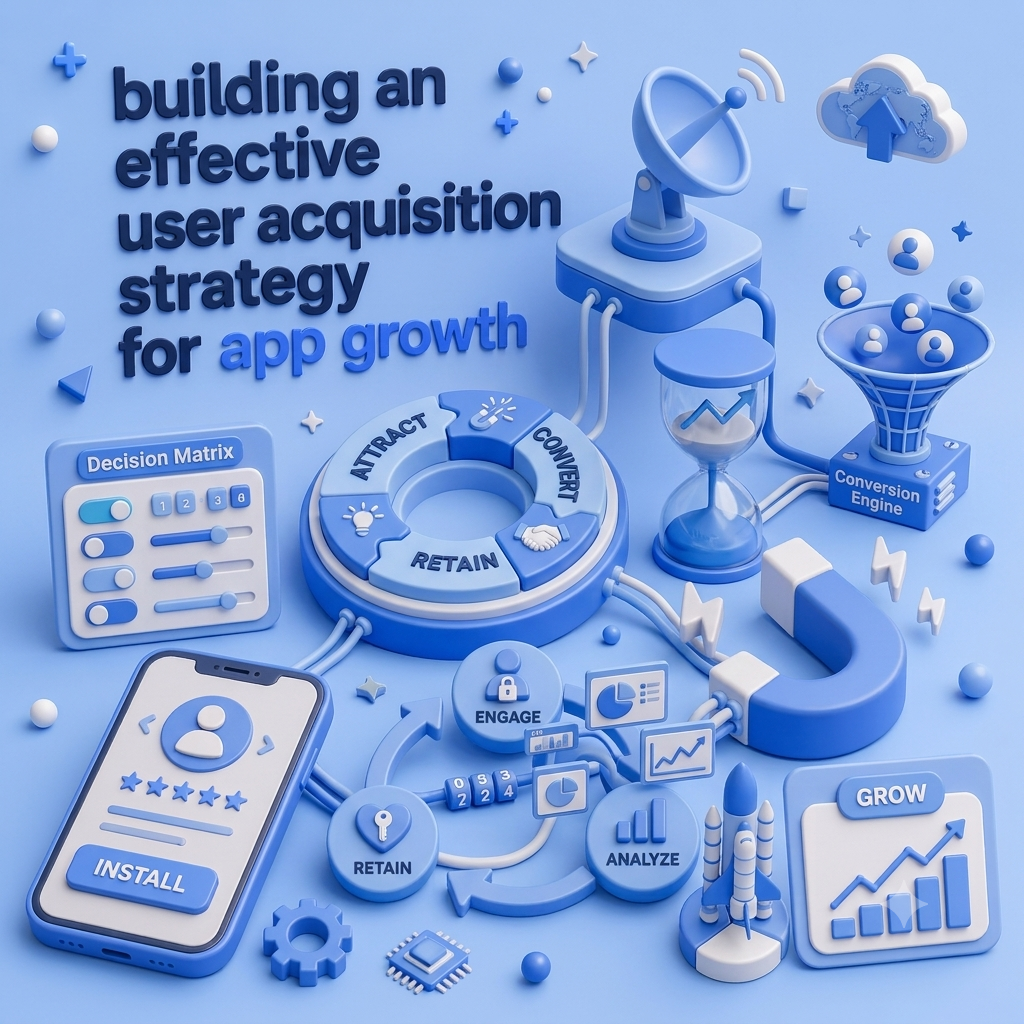
User acquisition is the process of driving new users to a mobile app through marketing activities, involving paid media, owned media and App Store Optimization (ASO) to increase visibility, generate installs and grow the user base. In the last few years, building an effective UA strategy has become increasingly complex due to rising costs, new privacy regulations and intense competition.
User acquisition has emerged as one of the most vital pillars for growth in the mobile app world, but it has also become more complicated than mere installations, in fact UA strategies should focus on getting not only numerous but also high-quality users, who can generate revenues in the long run. The benefits of user acquisition strategies for campaigns go beyond simply driving installs, they can help a business to grow organically by promoting brand visibility and market presence.
In addition, user acquisition helps generate income through multiple sources such as subscriptions, advertising and in-app purchases. To acquire users effectively, it is necessary to attract the ones who will engage with the app and continue to do it long-term, and to understand how to do it, we have compiled some key considerations and tips on how to build an effective user acquisition strategy.
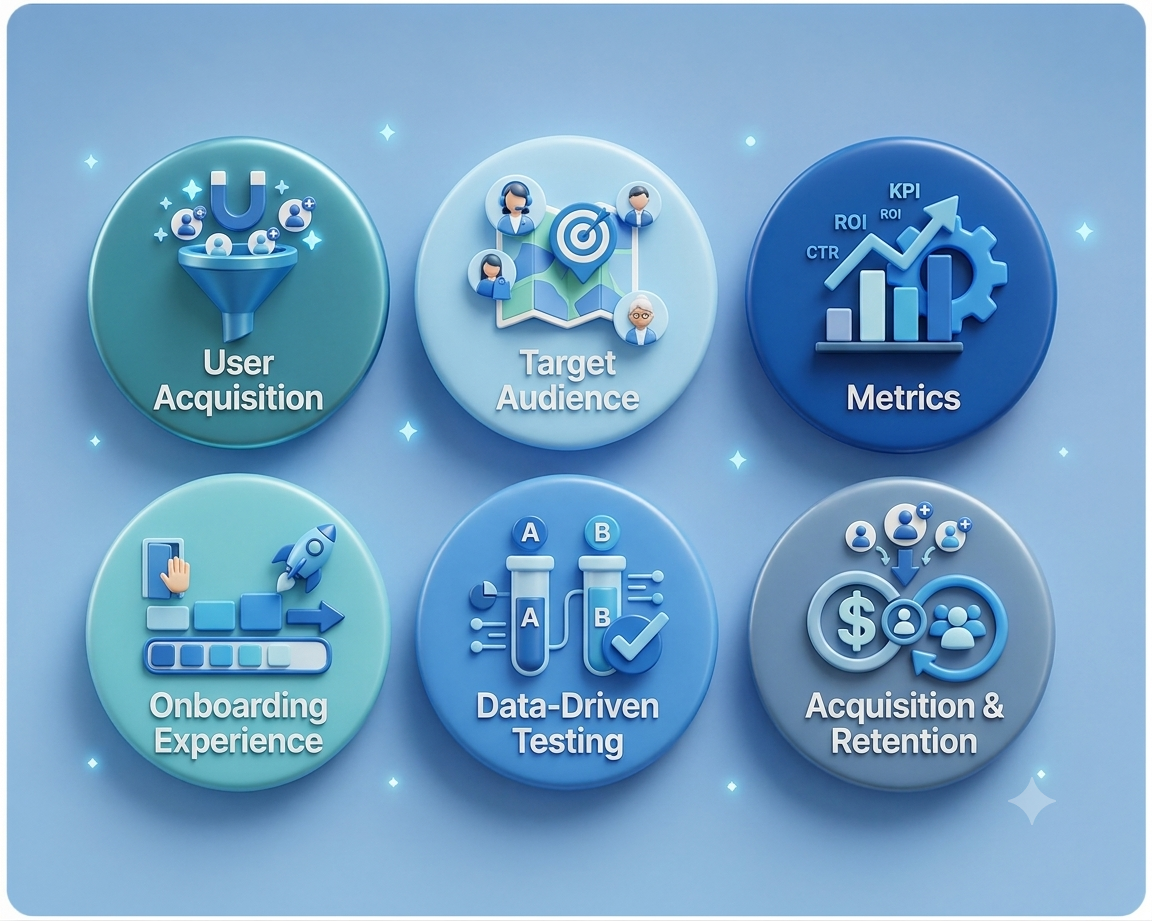
- Define your ideal user profile and choose the right acquisition channels
- Track the metrics that matter
- Optimize your onboarding experience
- Use data-driven experimentation
- Align user acquisition with retention
One of the first steps to build a successful user acquisition strategy is to understand your target audience: before launching a campaign and allocating budgets, marketers must identify who their users are and how their app solves a specific problem or fulfill one of their needs. The process begins with audience segmentation: instead of treating all users the same, marketers should divide potential customers into segments based on shared characteristics such as demographics, behaviors, interests and motivation.
These segments can be transformed into user personas, which help marketers to gain a deeper understanding of the audience’s needs and to tailor messages and advertisements accordingly, in order to improve their performance by creating more targeted and personalized campaigns. As campaigns generate data, segmentation can evolve into cohort analysis, which is useful to identify patterns and trends among different user groups.
Once the target audience has been defined, marketers need to determine how to reach it: modern acquisition strategies follow the principles of the PESO framework, which refers to Paid, Earned, Shared and Owned media. Each category contributes to growth, but paid and organic channels in particular form the foundation of mobile user acquisition.
- Paid media remains one of the fastest and most scalable ways to generate app installs: platforms like Facebook, Instagram, Google App Campaigns, Apple Search Ads, TikTok, Snapchat and X offer precise targeting options and access to large audiences. Facebook and Instagram offer extensive user data and optimization tools, Google App Campaigns provides access to users across Google Play, Youtube, Gmail and the AdMob network by using machine learning to automate and optimize campaigns, Apple Search Ads target users with strong intent within the App Store. Beside these major platforms, marketers can also rely on premium ad networks, affiliate networks, demand-side platforms (DSPs), influencer partnerships, connected TV advertising (CTV) and emerging AI-driven advertising opportunities.
- Organic acquisition is no less significant: it does not require advertising spend, but it calls for continuous investment in visibility, content and community engagement. App Store Optimization (ASO) is one of the most effective organic growth tactics that can help apps become more visible by means of keywords optimization, compelling descriptions, high-quality visuals, localization and reviews. Additional organic channels include content marketing, email marketing, referral programs, social media engagement, community-driven app growth initiatives and cross-promotion between products. Although these methods generally require more time to deliver results, they often end up attracting highly engaged users that drive sustainable growth.
The strongest user acquisition strategies rarely rely on a single channel, since diversification minimizes risks, audience saturation and creates opportunities to reach users at different stages of the acquisition funnel.
A successful user acquisition strategy depends on measurement. In order for marketers to know which elements work or not and where they need to allocate their budgets to reach app growth, they need to have reliable data. Focusing on install volume alone will not yield any useful results, since true success depends on what happens after a user downloads the app. The principal metrics that every marketer should take into consideration are:
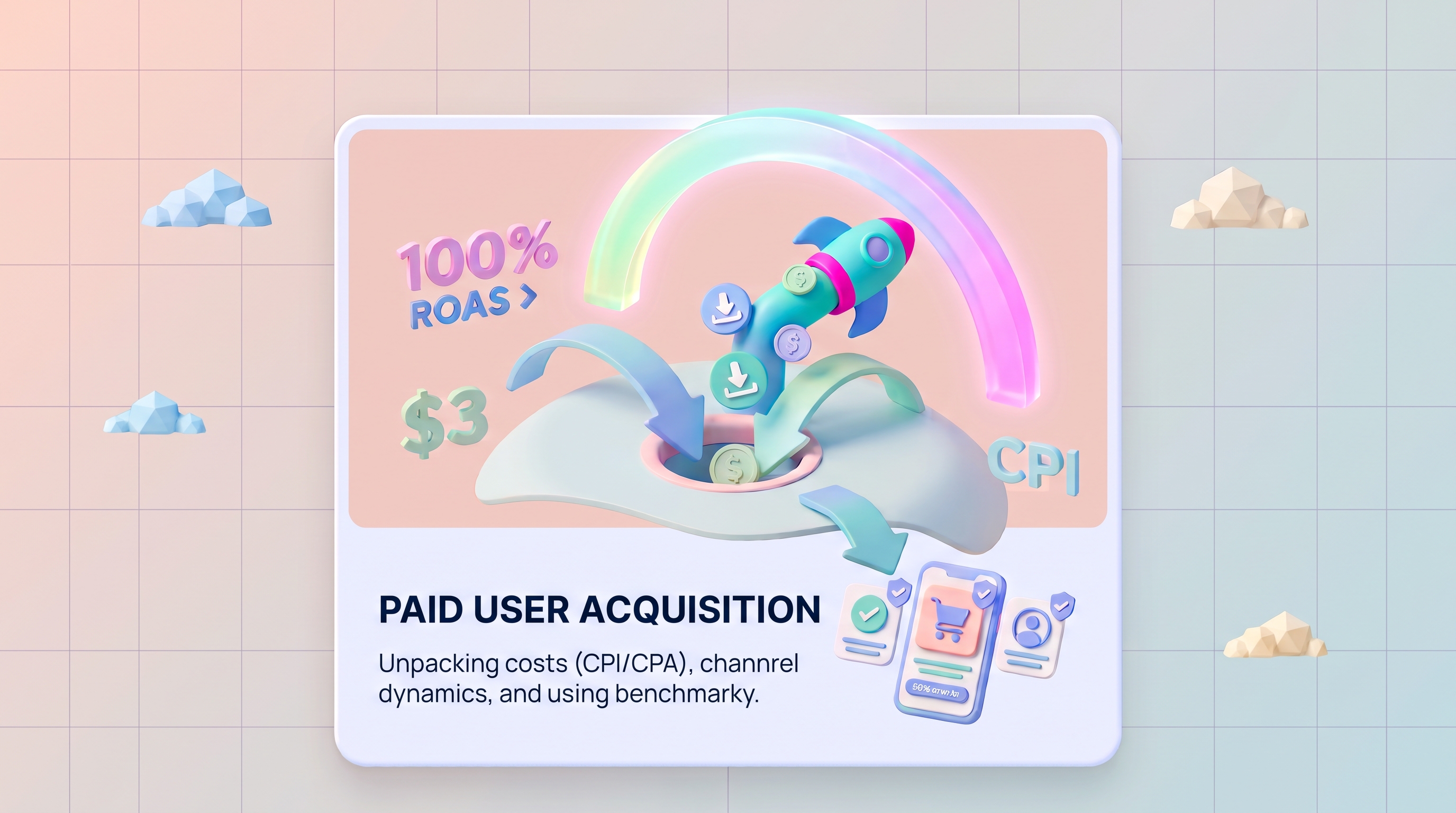
- Cost per Install (CPI), which measures acquisition efficiency. A low CPI does not necessarily indicate success since users might not engage with the app after the download: acquisition costs can differ across app verticals, operating systems and countries, for example finance and betting apps are characterized by higher CPIs, as well as markets from countries as the United States, Canada or Australia, while gaining new users is more expensive in iOS than in Android. Therefore, low CPIs values can mean that advertisers are targeting less valuable consumers or have chosen inappropriate markets for their advertising campaigns;
- Return on Ad Spend (ROAS), which measures precisely how much revenue is generated for every dollar spent on advertising, so they help marketers understand if acquisition efforts are producing profitable growth. Many app developers evaluate ROAS at different intervals, such as D1, D3, D7, D30 and D90 to understand how user value changes over time. Measuring ROAS across channels, audience segments and geographic markets also helps identify the acquisition sources that generate the most profitable users;
- Customer Acquisition Cost (CAC), which provides a broader view by measuring how much it costs to acquire a new customer. Comparing CAC across channels and audience segments helps marketers identify the most efficient acquisition sources.
More advanced performance evaluation focuses on metrics such as Average Revenue per User (ARPU), Lifetime Value (LTV) and Click-Through Rate (CTR), as well as Retention rate, which helps evaluate the effectiveness of creatives, messages, audience targeting and app store optimization.
Successful user acquisition campaigns are organized in phases, at first focused on achieving installs and then on optimizing for in-game activities, revenue-generating behaviors and profitability. This progression allows machine learning systems to gather enough data while helping marketers to identify the users most likely to contribute long-term value. Reliable measurement is crucial nowadays when privacy comes before anything else.
To overcome this challenge, many companies resort to using mobile measurement partners (MMPs) to consolidate attribution data from multiple platforms into a single source of truth. This helps eliminate reporting inconsistencies and enables for more informed decision-making.
Acquiring users is only half of the battle: once users install the app, the onboarding experience plays a critical role in making them remain engaged on or abandon the product. Onboarding represents the first interaction between users and the app, it determines the level of user satisfaction and helps users understand the value they can expect from the experience. A poor onboarding flow can lead to confusion and frustration, increasing the likelihood of immediate churn.
The key to creating a successful onboarding experience lies in simplicity: registration processes, for example, should be frictionless with a minimal number of required inputs, every additional step introduces another opportunity for leaving.
Clarity is yet another aspect that needs to be considered: users should quickly understand how the app works and how it solves their problem, in addition clear instruction, guided tours and tooltips reduce confusion and makes users comfortable.
Personalization can further improve onboarding experience, it can make it more engaging if it's based on the user’s preferences, acquisition channels or behavioral signals, in fact users who see content and features aligned with their interests are more likely to remain active.
Ultimately, onboarding should help users experience the app’s value right away. The quicker they reach a meaningful success moment, the higher the probability that they will continue using the product. An optimized onboarding experience does more than improve first impressions: it impacts retention, monetization and lifetime value. No matter how complex and advanced the user acquisition process is, if the user fails to experience value quickly, it will not yield any benefits.
The best performing user acquisition teams view optimization as an ongoing process: customer preferences are continually changing, advertisement channels are developing and markets are evolving, so constant experimentation enables marketers to sustain performance through adaptation to new circumstances.
Among other methods of optimization, A/B testing remains one of the most valuable ones. It allows marketers to conduct experiments with individual variables to understand their effect on performance and spot potential improvements. Commonly tested aspects include creative, messages, audiences, types of advertisement, bid strategies and channel of user acquisition.
In 2026, creative performance has become one of the major performance factors in user acquisition: as privacy regulations reduce targeting precision, advertisers experiment more with various creative elements to find the ones that attract the highest-value users.
Effective experiments do not only apply to advertising creatives, since marketers need to continually experiment also with target audiences, onboarding funnels, localization strategies, promotional messaging and overall campaign architecture. Small improvements across multiple stages of the funnel can accumulate to produce significant increases in retention, customer lifetime value and ROAS.
Automation has also transformed acquisition management. In fact current ad systems use sophisticated machine learning capabilities to automate bidding, targeting and budget allocation processes. Despite the power of automated technologies, human input is still required for goal-setting, result interpretation and strategic decisions.
Data quality remains the foundation of successful experimentation and high-performing teams are using a combination of first party data, mobile measurement platforms (MMPs), ad networks’ reports, business intelligence tools and third-party analytics solutions to generate useful insights and comply with privacy requirements like GDPR, ATT and SKAdNetwork.
Many organizations treat acquisition and retention as separate disciplines, when in reality app growth depends on their alignment. User acquisition creates opportunities for growth, but only through retention growth will be sustained.
Acquiring a new user is often significantly more expensive than retaining an existing one, so maximizing retention and LTV has become essential for maintaining profitable growth, due to the rising costs of user acquisition across multiple platforms. Retention begins even before any user makes a purchase or subscribes to the app’s services. The expectation created via the acquisition campaigns play a key role in how the app is viewed once installed: it is in fact likely to disappoint users and cause them to give negative feedback.
The most successful growth teams evaluate an acquisition channel based on the quality of users they deliver, rather than focusing solely on metrics like volume of installs. A channel that generated fewer installs may ultimately outperform a higher-volume source if its users demonstrate stronger engagement, retention and monetization.
Localization also plays an important role in both acquiring and retaining users: customizing messaging, visual design, user onboarding and other aspects according to the preferences of the target market will result in better user engagement and a higher chance of retaining them for a longer period of time. Retaining users requires community-building, customer satisfaction, referrals and ongoing engagement. Loyal users often become brand advocates that refer others to use the app themselves.
Conclusion
Building an effective user acquisition strategy is no longer about generating the highest possible number of installs, but real sustainable growth comes from acquiring the right users, delivering value as quickly as possible and continuously optimizing throughout every stage of the customer journey. By combining audience research, multiple acquisition channels, proper metrics, onboarding optimization, testing and retention-focused thinking, marketers can build a scalable growth engine capable of surviving in an increasingly competitive mobile ecosystem. The apps that are successful are not those that acquire the most users, but those that acquire the right ones and turn them into loyal, long-term customers.