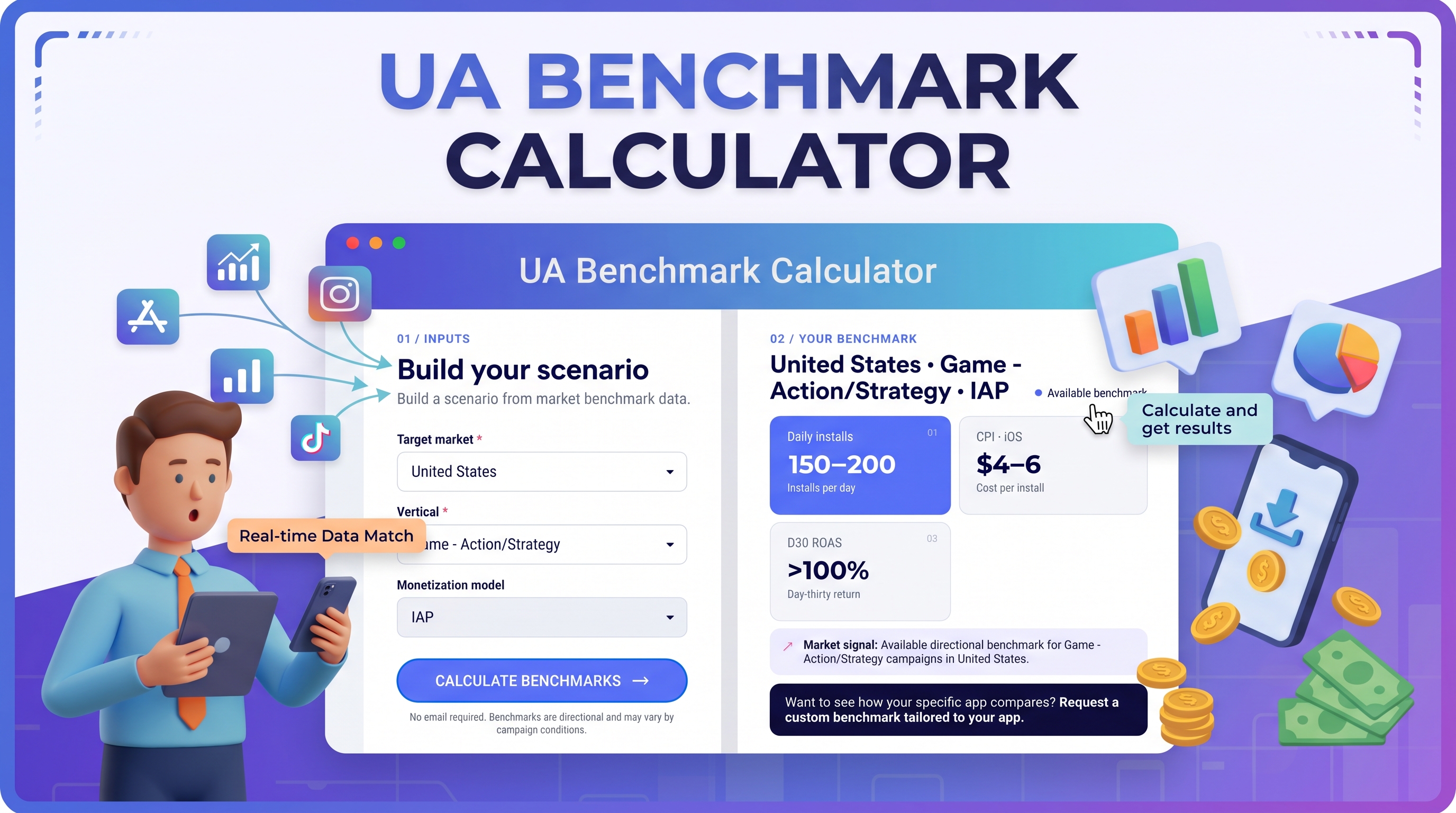
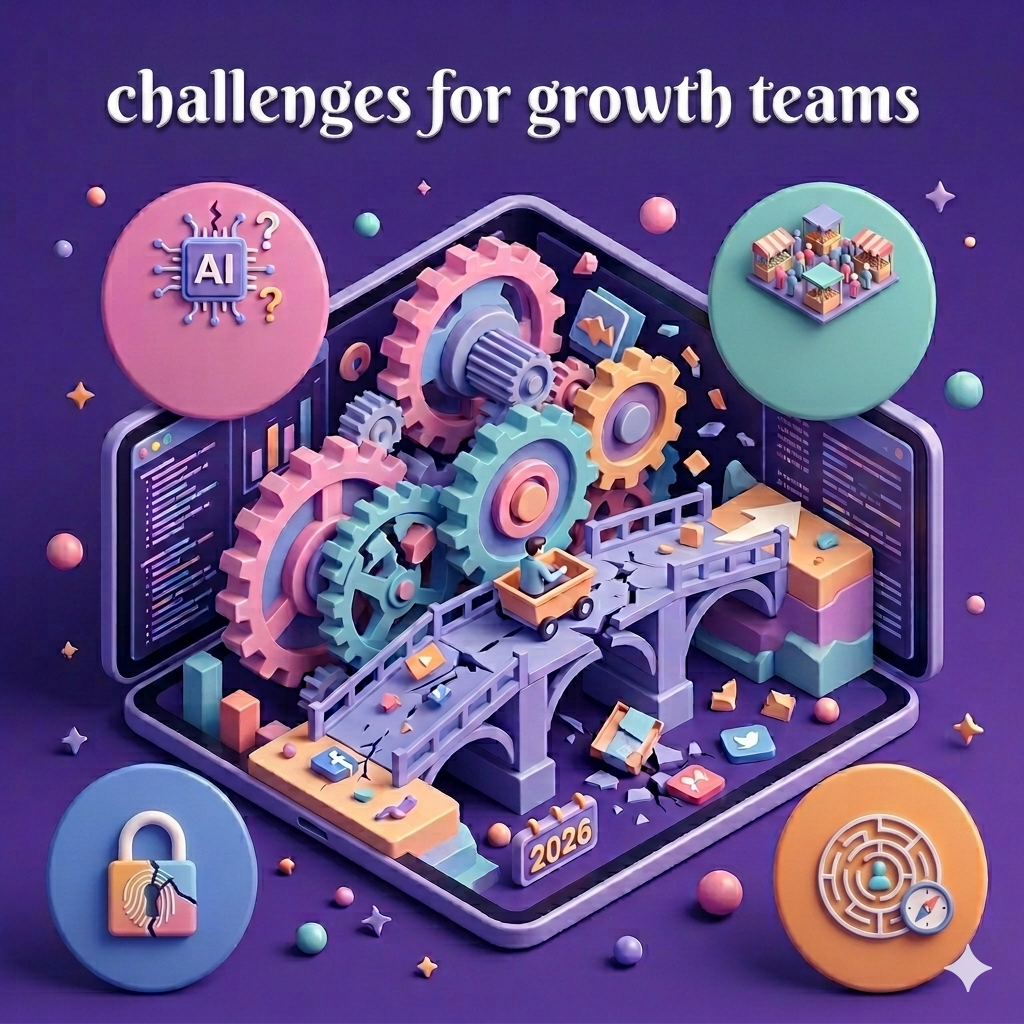
User acquisition has never been simple, but in 2026 it has become structurally more complex and the challenges that teams encounter are always more difficult to face. CPIs have increased and competition is more intense than ever, but cost alone doesn’t explain why so many growth teams struggle to scale. The entire user acquisition environment has in fact changed: targeting is weaker, attribution is fragmented and traditional channels no longer perform as they once did. In this landscape, success is no longer about driving installs, but it's about acquiring the right users and cost, developing systematic UA strategies that can sustain long-term growth.
The aim of this article is to describe the key user acquisition challenges in 2026, exploring the transformations they underwent and what they mean for modern growth strategies.
Rising costs and Diminishing returns
One of the principal and most evident issues right now is the steady increase in user acquisition costs. CPIs are rising across platforms, driven by auction-based systems and growing competition. In addition to that, user attention is fragmented and conversion rates are declining: users scroll past anything that doesn’t grab their attention immediately and delete apps faster. This results in bigger budgets used to maintain the same level of growth.
The real problem, despite that, is not cost, but it’s efficiency: an install has in fact little value if the user churns immediately. This is why growth teams focus on the parts they can actually influence, trying to develop better creative, faster creative testing, a tighter app store page and more honest previews. These small improvements help lower acquisition costs because they make install decisions easier for the user. Teams, therefore, try to ensure that every acquisition leaves room for profitability.
Targeting limitations and User saturation
One of the most pressing challenges is identifying the right audience: privacy changes, especially in iOS, have reduced the amount of accessible data and, therefore, the precision for targeting. In the meantime, the app market has continued to grow, giving users more choice and making them harder to capture. The combination of these two aspects leads to a common problem: paying higher prices for users who may not convert or retain.
To solve this issue, teams must go beyond traditional channels and identify incremental traffic sources, in order to reach new audiences who haven’t been targeted by other channels yet. This often implies diversifying user acquisition strategies by implementing different platforms, formats and channels.
Attribution complexity in a privacy-first world
Attribution has become one of the biggest challenges in user acquisition in 2026. Privacy updates, especially within Apple’s ecosystem, have reduced the amount of user-level data available to marketers, making campaign tracking far less precise than it used to be. Frameworks like SKAdNetwork, combined with self-attributing networks and probabilistic models, have created a fragmented ecosystem where data is often delayed, aggregated, or inconsistent across platforms.
As a result, growth teams struggle to clearly understand which campaigns are truly driving performance. Growth teams are shifting away from short-term metrics and placing greater emphasis on broader indicators such as retention, lifetime value, and long-term return on ad spend. Rather than asking which campaign generated the cheapest install, companies now need to understand which channels are bringing in users who remain engaged and profitable over time. In a privacy-first environment, perfect attribution no longer exists. The challenge in 2026 is not achieving complete visibility, but learning how to make confident decisions despite incomplete data.
Profitability and the shift to user quality
Maintaining profitability has become increasingly difficult as acquisition costs continue to rise. In 2026, driving large volumes of installs is no longer enough if those users fail to engage, retain, or generate revenue over time. This is why growth teams are shifting their focus from quantity to user quality, prioritizing metrics such as ROAS, lifetime value, and cost per action rather than simply tracking CPI.
The challenge is finding users who not only install an app, but also become active and profitable in the long term. As budgets face greater scrutiny, companies need clearer connections between acquisition spend and business outcomes. This has pushed many teams toward more performance-oriented strategies, including rewarded acquisition models and deeper KPI analysis, to ensure campaigns are driving sustainable growth rather than short-term volume.
Retention over acquisition
In 2026, retention has become just as important as acquisition itself. Getting users to install an app is only the first step: the real challenge is keeping them engaged over time. Users today have endless choices and very little patience, which means apps are often deleted within days if they fail to deliver immediate value.
For growth teams, this creates a major pressure point. High acquisition spend becomes unsustainable when users churn quickly, forcing companies to continuously reinvest in new installs just to maintain growth. As a result, successful apps are focusing more heavily on onboarding, personalized experiences, live operations, and re-engagement strategies that encourage long-term activity. The goal is no longer just to acquire users, but to build experiences that keep them returning and ultimately increase lifetime value.
Conclusion
User acquisition in 2026 is no longer just about driving installs at scale. Rising CPIs, limited targeting capabilities, fragmented attribution, and increasing pressure on profitability have made growth far more complex. At the same time, user expectations continue to rise, making retention and long-term engagement critical to sustainable success.
For growth teams, this means that traditional UA strategies are no longer enough on their own. Successful companies are shifting toward a more integrated approach that combines data, creativity, performance analysis, and retention-focused experiences. The goal is not simply to acquire more users, but to acquire the right users and create enough value to keep them engaged over time.
In a market where attention is harder to earn and easier to lose, the apps that succeed in 2026 will be the ones that treat user acquisition as an ongoing growth system rather than a one-time marketing tactic.